
In this issue, Lee Ka Ho shares his experiences as a TA that have helped him to learn more about the differences between various foreign language teaching strategies. Born in Hong Kong, Lee Ka Ho (also known as Ricky Lee) came to Japan in 2021 and is currently a teaching assistant while studying intercultural studies at graduate school. Although Ricky Lee admits that he has been struggling with teaching English and using Japanese in the classroom, he notes that music has helped him build trust in his relations with students.
In this essay I will explain how I have managed to build relationships of trust with students by singing songs with them and how this has helped me to confidently teach them to speak English.
Relearning English in Japan
As a Hong Konger, learning to speak English has not been an easy task, especially when it comes to pronunciation. Even though I have been able to speak in English since childhood, lately I have been struggling to adjust my pronunciation so that I can be understood by my teachers and students in Japan. I came to Japan in 2021, hoping that people could understand my English even though I brought along my accented English from Hong Kong.
A researcher at Hong Kong Baptist University (Wakefield, 2021) argued that it is no longer possible to refer to Hong Kong English speakers as an EFL speaker, but neither could he say that they speak a fully formed new variety of English called Hong Kong English (HKE). Hong Kongers, like me, tend to seek out English-speaking social networks and choose to watch and listen to English-medium forms of entertainment, which means my English-speaking experience in Hong Kong was very ESL-like.
In Hong Kong, my relationship with my teachers was very close; I think my classmates also enjoyed friendships. However, we still maintained a serious attitude towards learning languages under the direction of the teacher in our classroom. Our relationship with teachers felt more like that of family or friends. Sometimes, during holidays when we were called to school for studying or other extracurricular activities, we would also include the teacher in holiday celebrations. For example, on Christmas, we might not go straight home. Instead, we would have a meal together or go somewhere with our teachers as a group.
Prior to entering university in Japan, I independently set out to relearn English that is closer to standard British or American English. I listened to podcasts and CNN and BBC newscasters and watched videos, such as documentaries on YouTube. I tried to mimic their standard pronunciation and practice daily. Through shadowing exercises and watching videos, I realized that when I repeat sentences several times, I am more likely to understand the British vocabulary and grammar structures. I also began singing English songs with my Japanese classmates who loved karaoke. When singing, I chose American hit pop songs.
Active Learning English Language Classrooms
Despite my worries, I was able to get a job working as a teaching assistant (TA) in an English oral communication class. The course was 15 weeks, and there were 25 non-English majors. I was confident with my teaching methodology, using the textbook CNN News English: Engaging College Students as Active Learners by Yamanaka et al. (2024). I received training while visiting other universities to present short lectures in English with my seminar classmates (see Figure 1).
Figure 1
Presenting at Soka University
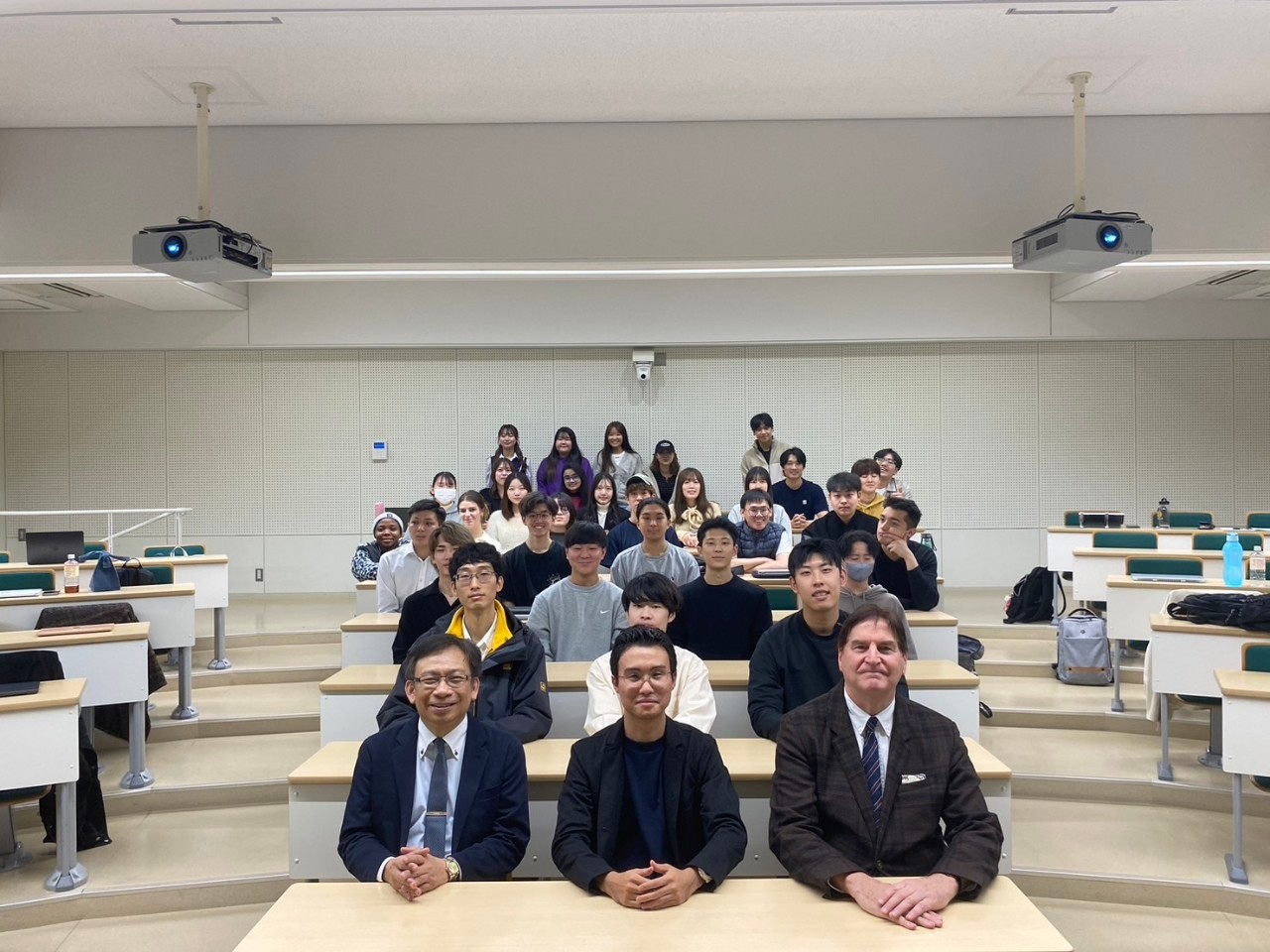
When it was time to assist my oral communication class, however, I noticed in the first few classes that many students lacked motivation in their English classes. I observed that several Japanese students seemed hesitant to speak out. In personal conversations, they told me they were afraid of making mistakes, so it was important for them to practice speaking and even singing in front of others to overcome this fear. As a result, I suggested to the professor in charge that we could introduce singing songs to create opportunities for the students to speak more English and improve their pronunciation. To break the ice in the classroom, I sang the hit song by Celine Dion, My Heart Will Go On. Then, the professor showed a clip from the movie Titanic.
Figure 2
Singing Christmas Songs in the English Classroom
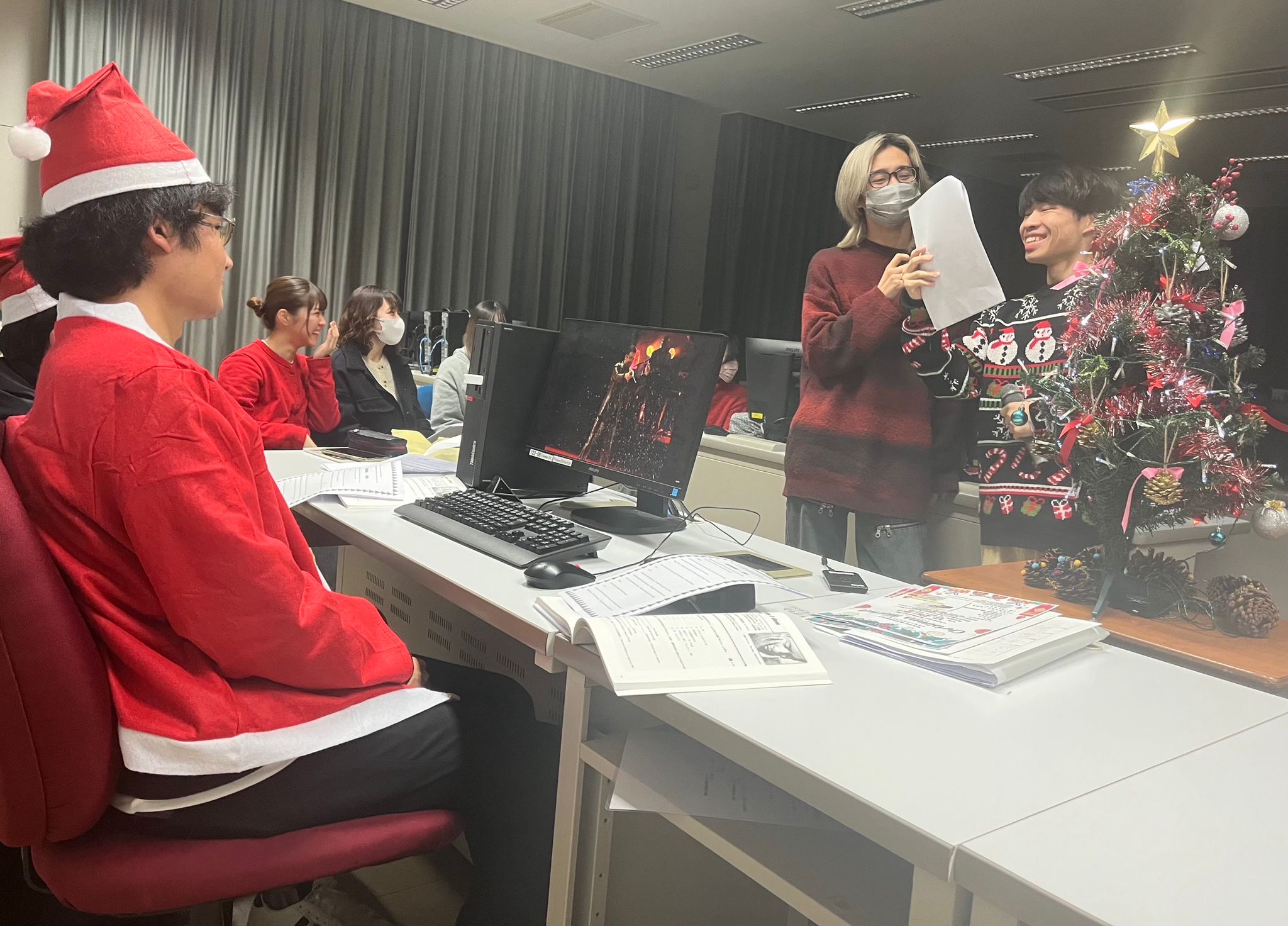
By Christmas time, we were regularly hosting classes with singing, so we suggested to the students, especially those who had been unmotivated at the outset of the course, to challenge the theme Learning English Christmas Songs. The suggestion was surprisingly accepted, and it worked! In this popular session, the students were divided into singing groups, and each group sang a song of their choice, such as Mariah Carey’s All I Want for Christmas is You, and Last Christmas by Wham (see Figure 2). This activity helped the students to build confidence and become more comfortable speaking in English in front of others.
Successful Things That I Have Done as a Teaching Assistant
I came to believe that building a trusting relationship is the most important aspect of being a good TA. If students trust their TA, they will be more comfortable and willing to communicate. Therefore, TAs must encourage students to ask questions and participate in the lesson. Otherwise, when students feel confused, they will hesitate to communicate. They might never ask questions, and as a result, their learning will be disrupted. For me, I do not think that I am any different from the first-year students I worked with because I am also a foreign language learner (in English, Japanese, and Korean). Therefore, I prefer to create a relaxing atmosphere that helps them to focus on the class easily. Sometimes, when I say something that is not clear, it makes the students realize that mistakes are a normal part of learning, which helps them grow. Over the 15 weeks of teaching English oral communication, I noticed that the students and I had become closer than at the beginning of the course. Some students have continued to talk to me in English outside of the classroom. This made me think that the distance between students, TAs, and possibly teachers should be reconsidered in schools. Without question, I believe creating a comfortable classroom atmosphere is an important responsibility of teachers. However, perhaps it is easier for the TA to accomplish this task. Apart from assisting with the learning of language, TAs must also focus on how to help students feel confident and make them see coming to school as a treasure.
Moreover, since I can now speak both Japanese and English, when necessary I can easily explain things to students in Japanese, which helps them understand the meaning of vocabulary and grammar. I can teach them more effectively because I can listen to their questions in Japanese and respond to them directly. Therefore, overcoming language barriers was one of the crucial factors that helped me become closer to students during the oral communication classes.
Teaching Assistant Drawbacks
Communicating with students in English to explain challenging vocabulary and grammatical sentences was not an easy task for me this semester. Therefore, I sometimes switched to Japanese language on a one-to-one basis to not disrupt the all-in-English environment preferred by the professor in charge of the classroom. Compared to assisting in a one-on-one style, teaching in a classroom of 25 students was quite difficult for me. Students came to the classroom with differing levels of English skills, so there was not enough time to take care of all the students all the time in a one-on-one style. In the classroom, many students were focused first on my singing and then on my teaching, but some said they found my grammar lessons difficult.
Teaching English Through a Western Cultural Lens
I originally thought of English as just a tool. However, after coming to Japan to study at a graduate school level in a department of international studies, I realized that the world is much bigger than I had imagined. According to Saunders (2024), although the 195 countries in the world are unique and different from each other, the majority of citizens have access to English as an international language (EIL). EIL allows us to connect with the world and understand other cultures, even if we only know English. As a TA in a graduate school, I think about how I can teach English in an interesting way. Because I understand English, I can explore Western countries and use my experiences to teach students, sharing what I have learned along the way.
According to Davitishvili (2017), teaching English, as well as the culture where it is used, makes the global language more relatable, enhancing both language acquisition and cultural awareness. By connecting the language to students’ interests and daily lives, TAs can empower them to engage with English in a meaningful way, preparing them for real-world conversations and interactions.
Furthermore, incorporating holidays (e.g., Thanksgiving, Christmas, Eid al-Fitr, and Hanukkah) allows students to learn both English and cultural customs. Discussing food, fashion, and sports also provides opportunities to explore specialized vocabulary, for example terms related to cuisine, fashion trends, or sports idioms, such as “touchdown” or “home run.”
Moreover, TAs can focus on a specific country and teach students about its culture through English. For example, if students are interested in Irish culture, we can teach them about traditional foods, drinks, music, and dances, as well as festivals and holidays in Ireland—all while using English. Not only will students learn about another country’s culture, but they will also acquire new vocabulary. This approach can inspire them to engage more deeply with the English language and explore it further.
The Future
I am currently traveling in Taiwan (see Figure 3) and other countries in Asia to explore more about the world and learn more about myself. Although studying is important, I believe that travelling to new places will also broaden my cultural knowledge. Next semester I am off to Europe, where I can improve my English by talking with local people and learning more about Western cultures. By gaining new experiences, I believe that when I return to my graduate school studies in the future (see Figure 4), I will be a stronger TA.
Figure 3
A Student and the Author (right) Singing English Songs During an Overseas Internship Course
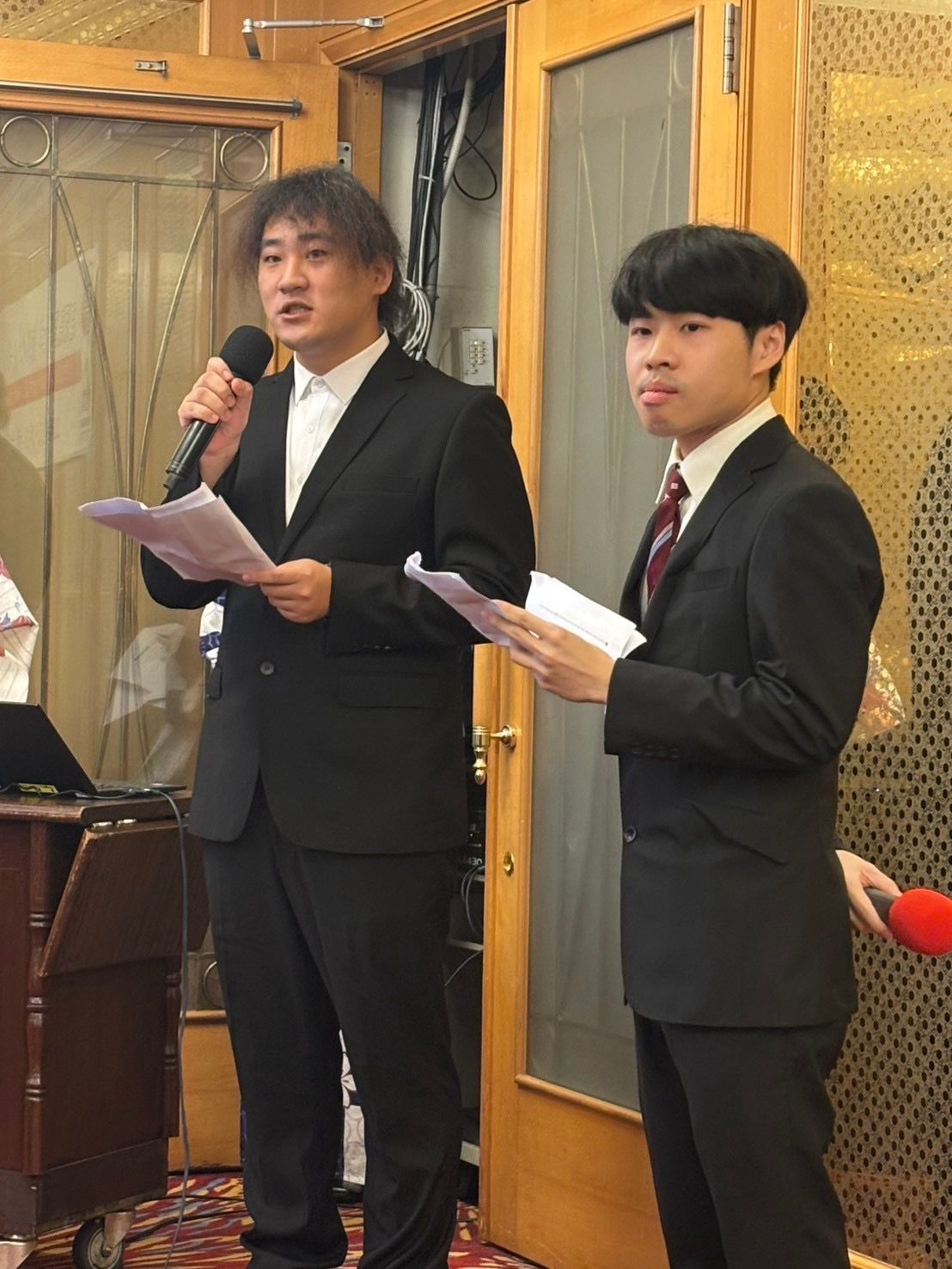
Figure 4
Logo for the Author’s Graduate School

References
Davitishvili, N. (2017). Cross-cultural awareness and teaching English as a second language in the context of globalization. Sino–US English Teaching, 14(9), 549–558. https://www.davidpublisher.com/index.php/Home/Article/index?id=34105.html
Saunders, T. (2024, December 23). How many countries are there in 2025? BBC Science Focus. https://www.sciencefocus.com/planet-earth/how-many-countries-are-there
Wakefield, J. C. (2021). English speakers in Hong Kong. International Journal of TESOL Studies, 3(3), 94–109. https://doi.org/10.46451/ijts.2021.10.02
Yamanaka, T., Roman, R., & Toyoshima C. (2024). CNN news English: Engaging college students as active learners. Asahi Press.